
Croatia is absolutely beautiful. The water is some of the clearest I have ever seen, the old towns are incredible, and there is so much to see beyond just the beaches.
But there are also quite a few things I wish I had known before we got here.
We visited Croatia as part of a much longer family adventure and traveled from Ičići to Plitvice Lakes, Split and Dubrovnik, with side trips into Bosnia and Herzegovina and Montenegro. We rented a car, stayed in apartments and Airbnbs, visited beaches and waterfalls, ate our way through several cities, and learned A LOT along the way.
Some things surprised us. Some saved us money. And a few would have been really helpful to know before we arrived.
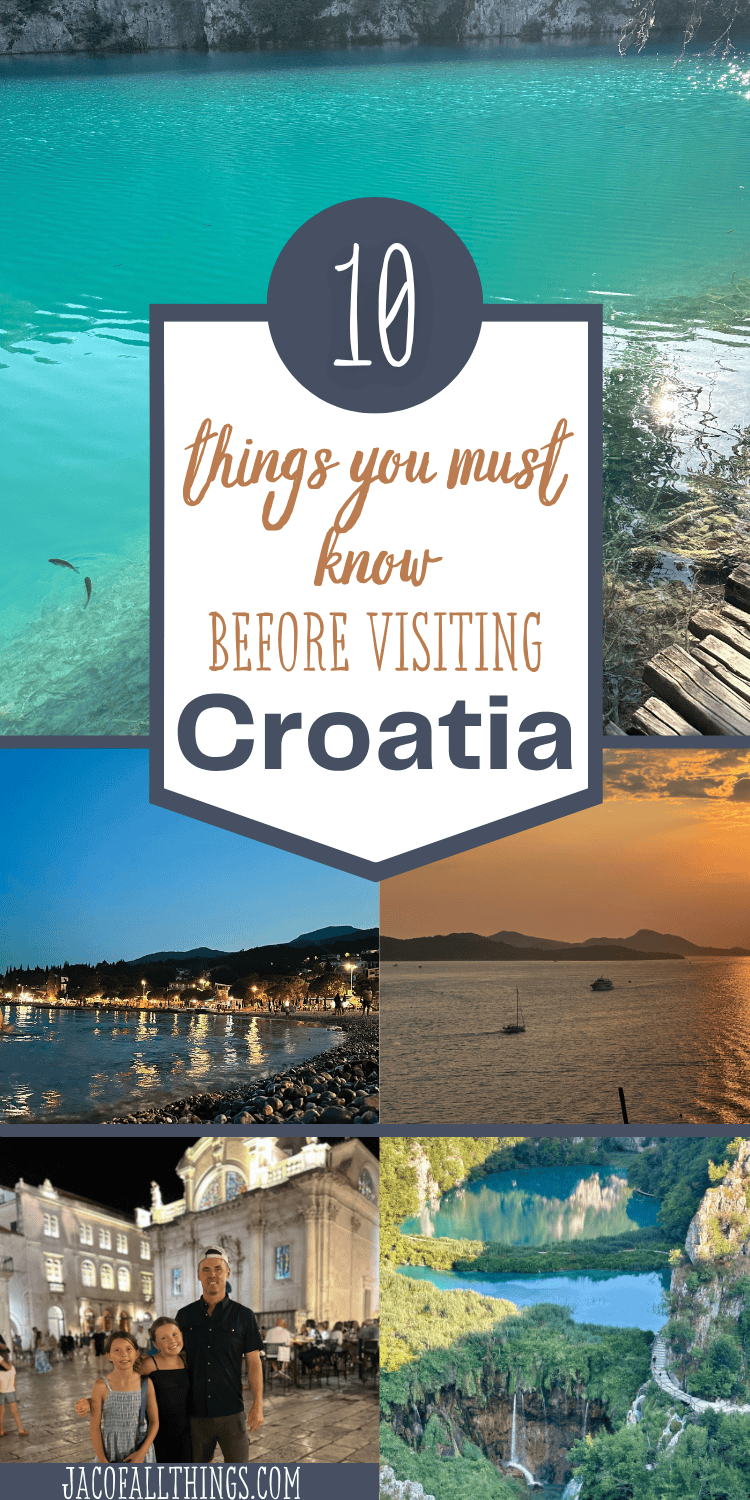
If you’re planning a trip to Croatia, here are 10 things I think you should know before you go.
This post may include affiliate links. As an Amazon Associate I earn from qualifying purchases. Read the full disclosure here.
1. Pack Water Shoes. You’ll Use Them More Than You Think.
Our water shoes have probably been one of my favorite purchases for this trip. We have used them almost every single day in Croatia.
Most of the beaches we’ve visited are rocky or covered in small pebbles instead of sand, and once you get into the water, it can be even rockier. There are also sea urchins in the water, and you definitely do not want to accidentally step on one of those.
We’ve used our water shoes at the beaches, while swimming and even at Kravice Waterfalls in Bosnia and Herzegovina. They’re lightweight, easy to pack, dry quickly and have come in handy way more than I expected.
And honestly, even though the rocky beaches take a little getting used to, I think they’re part of what makes the water here so beautiful. Rocky and pebbly areas can have less fine sand and sediment getting stirred up in the water, which is one reason the water can look so incredibly clear.
And if you’re worried about looking funny in water shoes, don’t be. Everyone here is wearing them!
10/10 recommend packing a pair.
I linked the water shoes our whole family has been using below.
2. Rent a Car to Travel Around Croatia, But Park It Once You Reach the Bigger Destinations
Having a rental car in Croatia has been incredibly helpful, but not necessarily in the way I expected.
We picked up our car in Rijeka, near Ičići, and used it to travel to Plitvice Lakes, Split and Dubrovnik. Having a car between destinations has been 100% worth it for us.
It gave us the flexibility to stop along the way, visit places that would have been much harder to reach otherwise and travel on our own schedule.
But here’s the part I didn’t expect: once we arrived in bigger destinations like Split and Dubrovnik, we barely used the car.
Parking in some of the bigger cities has been a challenge.
In Split, our Airbnb came with free parking, which was amazing, but actually getting our car into the spot was another story. The parking was essentially parallel parking up on the curb, and we were so bad at it that our wonderful Airbnb host ended up helping us park the car.
We were moving it a couple of inches at a time trying to get it perfectly positioned and out of the road.
Maybe this is just because we’re used to parking in the United States, but parking here definitely took some getting used to!
Once the car was parked in Split, we left it there. We walked almost everywhere, and when somewhere was a little too far, we took an Uber. It was easy and honestly much less stressful than trying to find another parking spot.
Dubrovnik has been similar.
We stayed about 15 minutes outside of the main tourist area in Lozica, so having the car has been helpful for things like grocery shopping and exploring outside the city. But when we go into Dubrovnik itself, we take an Uber.
Driving around Dubrovnik’s historic center is restricted, and parking near Old Town can get very expensive. For us, it simply hasn’t been worth dealing with the car when we’re heading into the city.
One thing to know if you’re staying outside of Dubrovnik like we are: Ubers are available, but they haven’t always been quite as instant as we’re used to. We’ve had a few drivers pass on our ride before someone accepted it, so I would give yourself a little extra time.
We also saw plenty of tuk-tuks around. We didn’t use one ourselves in Croatia, but they looked like such a fun and easy way to explore. We’ve used tuk-tuks in other places and have always loved them, especially as a way to get a quick feel for a new city.
If we were doing this trip again, I would definitely look into booking one early in the stay just to explore and get our bearings.
A Few Other Things to Know About Driving in Croatia
There are quite a few toll roads, so be prepared to take a ticket and pay when you exit. We were able to pay with a credit card or euros, but pay attention to which lane you enter so you don’t accidentally head into one designated for electronic toll collection.
The speed limits also change a lot.
We would go from one speed to another and then back again pretty quickly, which took some getting used to. There are speed cameras throughout Croatia, so pay close attention to the posted limits.
We used Waze pretty much whenever we drove, which was really helpful for keeping track of the changing speed limits.
And one funny lesson learned: check whether you accidentally have “avoid tolls” turned on in your navigation app.
I could not understand why my husband’s phone kept sending us on the strangest, most roundabout routes while mine was showing something completely different.
Once I realized “avoid tolls” was turned on and changed it back, suddenly our directions made a lot more sense!
My recommendation: Rent a car if you’re traveling between destinations and want the freedom to explore Croatia along the way. But once you arrive somewhere like Split or Dubrovnik, park it and walk, Uber or look into a tuk-tuk whenever you can.
It will save you a lot of parking stress.
3. Grocery Stores Are Everywhere, and They Can Save You a Lot of Money
Because we’re traveling for about 20 weeks, we knew from the beginning that we did not want to eat out for breakfast, lunch and dinner every single day.
Our plan has been to grab breakfast and lunch from grocery stores whenever possible and then go out for dinner. We’ve even made a few dinners in our Airbnbs along the way.
And thankfully, grocery stores have been incredibly easy to find throughout Croatia.
They aren’t always huge supermarkets. A lot of the time they’re smaller neighborhood markets, but we’ve had no problem finding everything we need for easy meals and snacks.
We’ve bought yogurt, protein shakes, cereal, bread, meats and cheeses, fruit, chips and plenty of supplies for peanut butter and jelly sandwiches.
We have made A LOT of peanut butter and jelly sandwiches on this trip!
They’ve been perfect for road trips, hiking days and trips to places like waterfalls where we don’t necessarily want to stop for a full meal.
I also packed a small collapsible cooler for this trip, and it has ended up being so useful. We can throw in a couple of yogurts, protein shakes, sandwiches and cold drinks before getting in the car.
Since a lot of our drives between destinations have been two or three hours, it’s been really nice to have food with us instead of having to find somewhere to stop every time someone gets hungry.
We used this Monti collapsable cooler but also found a similar more affordable option.
Packing food for travel days definitely helped our budget.
Before coming to Croatia, I heard over and over again how affordable it was.
Maybe that was more true several years ago, but I would not describe Croatia in 2026 as a super cheap destination, especially in the popular coastal areas.
Croatia switched to the euro in 2023, and prices have also risen as tourism has grown. Whatever the reason, the Croatia we’ve experienced has definitely not felt like the incredibly cheap destination I had heard about from people who visited years ago.
We’ve generally found that a sit-down dinner can easily run around €20 to €35 per person, and that’s not necessarily somewhere fancy.
Once you add drinks, appetizers or water for the table, it adds up quickly. We’ve paid around €5.50 for water at some restaurants.
We’ve adjusted by sharing meals sometimes, grabbing street food or sandwiches, cooking occasionally and using grocery stores for most breakfasts and lunches.
So if you’re trying to travel Croatia on any kind of budget, don’t overlook the grocery stores.
They’re convenient, easy to find and have been one of the simplest ways for us to keep our food spending somewhat under control.
4. Getting From Venice to Croatia Is Easier Than You Think
This is one I really wish I had found more information about before our trip.
Venice was originally going to be our first stop before continuing through Italy, but our plans changed and we decided to head to Croatia instead.
The problem was that I had gotten such a great deal on our flights into Venice that I really did not want to change them.
So then came the question:
How do we actually get from Venice to Croatia?
I searched high and low. Blogs, Facebook groups, Reddit, forums, you name it.
There are definitely options.
You can take a ferry from Venice to the Istria region of Croatia, with seasonal routes to places including Poreč, Rovinj and Pula. You can also piece together buses, trains and ferries depending on where in Croatia you ultimately want to go.
I even looked at flying.
But every option seemed to create another logistical issue for us.
The ferry was probably our closest contender, but the schedules I found would have had us arriving later in the day. That created another problem because we needed to check into our Airbnb and eventually pick up a rental car, and some rental car locations were already closed by the time we would arrive.
Then I discovered something that somehow had barely come up in all of my searching:
You can just hire a driver from Venice to Croatia.
We booked through Daytrip.com, and it ended up being one of the easiest travel days we’ve had.
You enter where you want to be picked up and where you want to go, and they arrange a private driver to take you door-to-door. You can even add sightseeing stops along the way if there are places you want to visit.
Our drive was about three hours and cost us around €350 for our family.
We were picked up exactly where we needed to be, our luggage was handled for us and we were dropped off directly in Croatia.
I even needed to make a change to our itinerary after booking. I sent a message through their chat, heard back within a couple of hours and everything was changed for us.
It was just easy.
Another huge benefit was that we didn’t have to deal with renting a car in Italy and figuring out how to return it in another country.
And our driver, Filip, was the best.
For us, this was absolutely worth it.
It may not be the cheapest way to get from Venice to Croatia, especially if you’re traveling solo or as a couple, but for a family of four, once I compared the convenience, schedules and all the moving pieces of some of the other options, it made so much sense.
10/10, I would absolutely use Daytrip again.
I’ve linked Daytrip below if you want to check pricing for your own route. (Use this referral link to save 10% on your Daytrip booking!)
If you’re trying to get from Venice to Croatia, especially with kids and luggage, definitely price out a private transfer before assuming you need to piece together trains, buses and ferries.
5. Check the Border Wait Times Before You Drive Outside Croatia
This is something I really did not think much about before our trip.
We were in Croatia during the first week of August, which is apparently one of the busiest times you can possibly be here.
Europeans are on summer vacation, tourists are everywhere and some of the border crossings can get absolutely slammed.
Our original plan was to drive from Dubrovnik into Montenegro.
We specifically made sure our rental car was approved for travel outside of Croatia because we also wanted to visit Bosnia and Herzegovina and Montenegro.
Bosnia and Herzegovina could not have been easier.
We crossed the border on our drive between Split and Dubrovnik so we could visit Kravice Waterfalls. I think the entire border crossing took us maybe five to eight minutes, and that’s even after we somehow ended up in the wrong lane and had to be redirected!
Montenegro has been a completely different story.
In the days leading up to our planned trip, I kept reading reports from travelers who were waiting hours to cross between Croatia and Montenegro.
We ultimately decided that spending a huge chunk of our day sitting at the border was just not worth the risk, so we changed our plans and booked a ferry from Dubrovnik instead.
And I’m glad we didn’t wait until the last minute.
When I looked several days before our trip, our ferry had only about 15 tickets left.
Check HAK Before You Leave
If you’re planning to cross the border by car, check HAK, the Croatian Automobile Club, before you go.
HAK provides current road and border information, including estimated wait times and live border cameras.
I would check it the night before and then again right before leaving.
I’ve included a direct link to the HAK border information here.
Another source that has been surprisingly helpful? Facebook groups.
I joined Croatia and Montenegro travel groups, and people were posting their actual border experiences every day.
Being able to see someone say, “I crossed this morning and waited three hours” can be incredibly useful when deciding whether to change your plans.
There are also multiple border crossings, so if one is backed up, it may be worth looking into an alternative route.
My biggest advice: Don’t just put Montenegro into Google Maps and start driving. Check the border first.
A five-minute check could potentially save you hours, and if the lines look terrible, look at another crossing, hire a driver who knows the area or consider taking the ferry instead.
6. Don’t Skip Plitvice Lakes, and Book Your Tickets Early
We almost didn’t go to Plitvice Lakes.
It is definitely a little out of the way compared with some of Croatia’s coastal destinations, and I kept going back and forth on whether it was worth adding the extra driving.
Ultimately, I really wanted to see it, so we said, “Fine, let’s do it.”
I’m so glad we did.
We drove there from Ičići and broke up the trip by stopping at some caves along the way, which ended up being a really fun stop.
The rest of our drive included a lot of switchbacks and slower mountain roads. There are multiple ways to get to Plitvice, so that may have just been the route we took, but it was definitely a slower, very scenic drive.
One thing I would absolutely recommend is booking your Plitvice Lakes tickets in advance, especially if you’re visiting during the summer.
Tickets are sold for specific entrance times, and the number of visitors allowed for each time slot and entrance is limited. You may be able to buy tickets when you arrive if they haven’t sold out, but I would not count on that during peak season.
Our apartment host warned us that tickets do sell out and told us to book as early as possible.
I would also choose the earliest time you can reasonably manage.
During our summer visit, the first entry time was 7:00 a.m., and the earlier you go, the cooler it will be and the fewer people you’ll be sharing the trails with.
There is quite a bit of sun throughout the park, so avoiding the hottest part of the day made a big difference for us.
There are several different paths you can take depending on how much time you have and how much walking you want to do.
We chose Path C, which starts at Entrance 1.
We finished in around four hours and 15 minutes. That included two stops, including one to eat, and we were walking with our two girls, ages 10 and 11, so we definitely weren’t racing through it.
For us, it was the perfect amount of time.
We packed peanut butter and jelly sandwiches for the walk, because apparently that is now our official Croatia travel meal, but there are also places along the route where you can buy food and drinks.
And now for my favorite Plitvice tip…
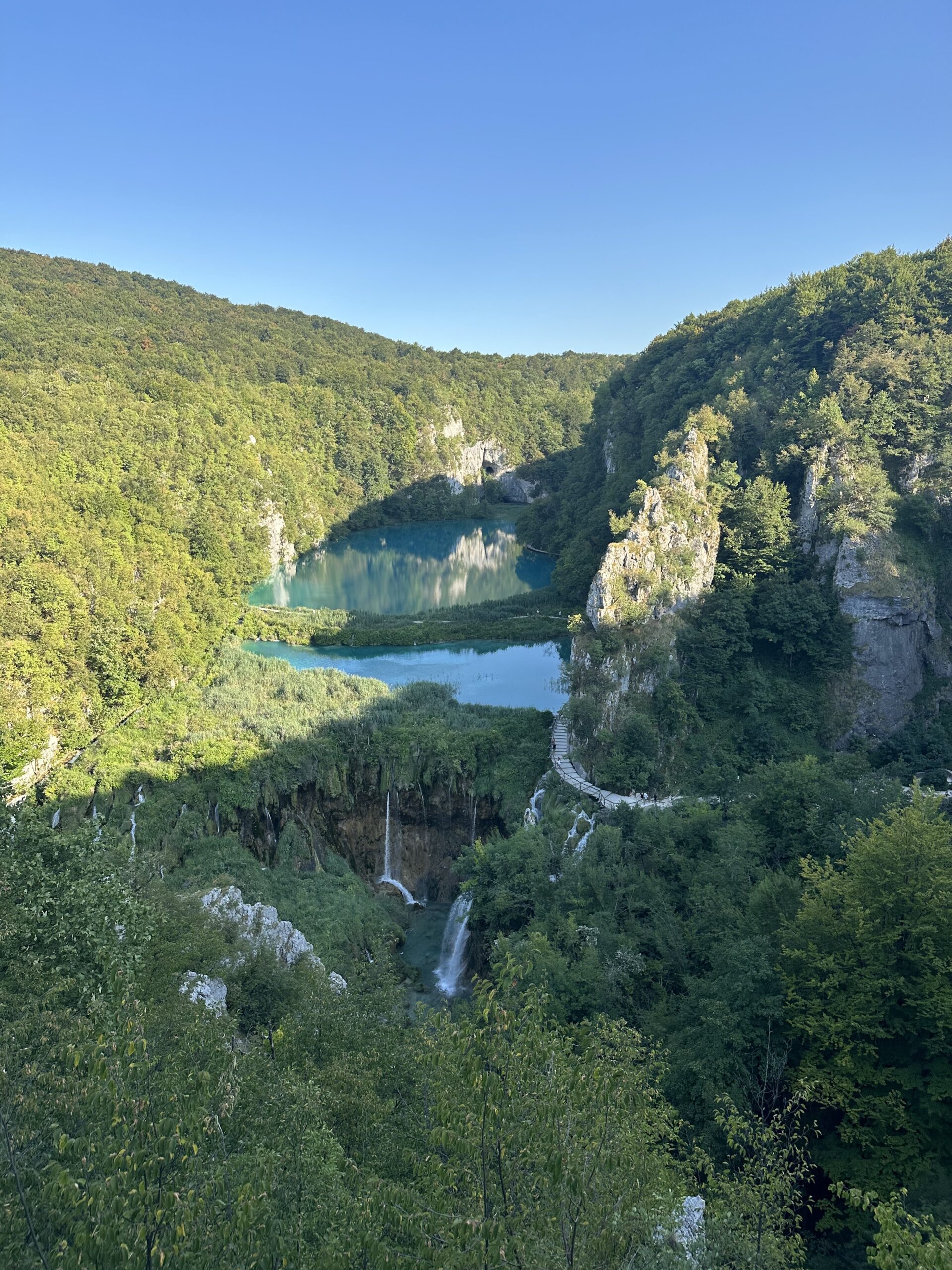
Our apartment host told us about a viewpoint above the falls that we never would have known to look for on our own.
I’m calling it a “secret” viewpoint very loosely because we definitely weren’t the only people there, but it was much quieter than some of the main areas and the view from above was absolutely stunning.
I’m including a screenshot of the location below so you can find it, along with the photo we took from the viewpoint. Within the map, I’ve pinned where you can park your car. If you are looking at the bridge, turn left onto a small trail right before the bridge. Walk for about 5 minutes to the viewpoint.
My biggest Plitvice advice: Book your tickets ahead of time, go early, pick a path that matches how much walking you actually want to do and don’t skip it just because it looks a little inconvenient to get there.
It was absolutely worth the detour for us.
7. You Don’t Need Much Cash, But Keep Some Euros With You
For the most part, we have been able to use credit cards almost everywhere in Croatia.
That said, there have definitely been a few smaller cafés, stands and other places where we needed actual cash.
We’ve also found it helpful to have a few euros on hand for tips.
Tipping in Croatia is not the same as it is in the United States, but we’ve still wanted cash occasionally to leave a few euros after a meal or to tip a tour guide.
So even if you plan to use a credit card for almost everything, I would still keep some euros with you.
We’ve seen ATMs pretty much everywhere we’ve needed them, so getting cash has not been difficult.
One other really important money tip: when a credit card machine asks whether you want to pay in euros or US dollars, choose euros.
You’ll sometimes see a screen asking if you want the charge converted into your home currency.
It may feel easier to select US dollars because you immediately know what you’re paying, but that conversion is called dynamic currency conversion, and it can come with a less favorable exchange rate or additional markup.
We always choose EUR and let our credit card company handle the conversion instead.
My rule in Croatia: Use a credit card when you can, carry a little cash just in case and always choose euros when you’re given the option at checkout.
8. You Can Drink the Tap Water in Croatia
For our first couple of days in Croatia, we kept buying bottled water at the supermarket because we just assumed that was what we needed to do.
Then one of our Airbnb hosts told us that the tap water was perfectly safe to drink.
From that point on, we started filling up our water bottles directly from the tap, and we’ve also used some of the public drinking fountains we’ve come across near beaches and other public areas.
We saw plenty of other people doing the same thing.
And honestly, I think the water tastes great!
That has been another small way we’ve been able to save money, especially since we’re constantly needing water in the August heat.
One thing I’m really glad we packed was insulated reusable water bottles.
It has been HOT, and plastic water bottles warm up incredibly quickly when you’re walking around all day.
Being able to refill our insulated bottles and keep the water cold has been so much better.
So bring a reusable water bottle, fill it from the tap and keep an eye out for public drinking fountains while you’re exploring.
9. Check the Cruise Ship Schedule Before Visiting Popular Spots
We have been amazed by how busy some of Croatia’s most popular destinations can get.
Dubrovnik has been incredibly busy. Parts of Split have been packed. Plitvice Lakes was busy.
And while I think it’s wonderful that so many people are discovering how beautiful this part of the world is, visiting during the first week of August has definitely meant dealing with some serious crowds.
One really simple thing you can do is check the cruise ship schedule before planning your day.
A lot of visitors to places like Dubrovnik are arriving on cruise ships, and thousands of additional people can enter the city within a relatively short period of time.
You can look up the port schedule online and see which ships are scheduled to arrive that day, along with their arrival and departure times.
For example, if you see that several large ships are arriving in the morning, that probably isn’t the time I would choose to visit one of the city’s most popular attractions.
Instead, try to get there earlier, or plan your visit for later in the day when some of those passengers are starting to head back toward their ships.
We’ve found that just knowing when the ships are coming and going can help us decide when to visit the places we really want to see.
I’ll link the cruise schedule below. Just search for the port you’re visiting and look at the ships scheduled for that day.
My biggest advice: It takes about two minutes to check, and it could make a huge difference in how crowded your experience feels.
10. Croatia Is Dressier Than You Might Expect
One thing that surprised us is how nicely people dress, especially in the evenings.
The Croatian people have been absolutely beautiful and really dress up for dinner.
There have been a couple of times when we were out all day on an excursion and then decided to stop somewhere for an early dinner, and we definitely felt underdressed.
I remember thinking, “Okay, next time we are going back to change first.”
In August, almost every woman we’ve seen going out at night has been in a dress. Usually something lightweight and summery because it is HOT.
I have barely seen jeans at all.
For men, we’ve seen a lot of button-down shirts with shorts and nicer sandals. Not necessarily anything super fancy, but definitely more put together than athletic clothes and flip-flops.
And this has been true even at restaurants that aren’t particularly fancy.
During the day, of course, it’s different.
If you’re hiking somewhere like Plitvice Lakes, athletic clothes make complete sense. But if you’re heading into Old Town or going out for dinner, I would pack a few outfits that feel a little more polished.
One other important thing to know: don’t walk around town in just your swimsuit.
Some Croatian coastal cities have rules against walking around historic or city-center areas in swimwear or without a shirt, so if you’re leaving the beach and heading into town, throw on a dress, cover-up, shirt or shorts first.
Honestly, I also think dressing up a little has been part of the fun.
Croatia has such beautiful old streets, waterfront restaurants and outdoor cafés, and people really do make an evening out feel like an evening out.
So pack the water shoes for daytime, but definitely throw a cute dress or two in your suitcase for dinner.
Bonus: Things I’m So Glad We Packed for Croatia
These aren’t necessarily all Croatia-specific, but there are a handful of things we packed that we have used over and over again on this trip.
Water Shoes
Water shoes are at the very top of my list of essentials to pack.
We’ve used them at rocky beaches, in the water and at waterfalls. They’re lightweight, dry quickly and protect your feet from sharp rocks and sea urchins.
Quick-Dry Beach Towels
We brought lightweight microfiber beach towels, and we have used them almost every single day.
Between beaches, waterfalls and random places where we just wanted something to sit on, they’ve been incredibly useful.
They dry quickly and take up almost no room in our bags.
A Beach Bag
I’m really glad I packed a lightweight beach bag that we could easily throw towels, water bottles, sunscreen, snacks and water shoes into.
It has been useful for way more than just the beach too.
A Collapsible Cooler
A cooler has been one of our most-used items.
We’ve packed sandwiches, protein shakes, yogurt, drinks and snacks for road trips, beaches, waterfalls and hiking days.
It folds down when we aren’t using it, which makes it much easier to travel with.
Insulated Reusable Water Bottles
Since we’ve been filling our water bottles from the tap and public drinking fountains, these have gotten a ton of use.
And in the August heat, having insulated bottles instead of warm plastic water bottles has been so nice.
Laundry Detergent Sheets
If you’re staying in Airbnbs or apartments with washing machines, using laundry detergent sheets have made doing laundry incredibly easy.
Instead of traveling with liquid detergent or buying a full container everywhere we stay, we just throw a detergent sheet into the washing machine.
And in the summer, we’ve found that everything dries incredibly quickly outside.
A Laundry Bag
Nothing exciting, but surprisingly helpful.
We keep all of our dirty clothes separate while traveling and can easily carry everything over to the washing machine in a laundry bag when it’s time to do laundry.
A Portable Sound Machine
This one saved us!
We’ve stayed in some busier areas, and one night there was literally a music festival happening on the beach outside of where we were staying.
Having small portable sound machines has made sleeping in apartments, hotels and noisier areas so much easier.
A Universal Travel Adapter
Definitely bring a good universal travel adapter.
We packed one that works in multiple countries, which has been especially helpful since Croatia is just one stop on a much longer trip.
It means we don’t have to carry a different adapter for every country we visit.
Your Own Shampoo, Conditioner and Soap
If you’re staying in Airbnbs or apartments, I wouldn’t assume shampoo, conditioner and soap will always be provided.
We brought our own, and solid shampoo and conditioner bars can be a great option if you’re trying to cut down on liquids in your luggage. (Don’t forget to bring a case to keep them in as well!)

Is Croatia Worth Visiting?
Absolutely.
There have definitely been things about Croatia that surprised us. It has been busier and a little more expensive than I expected, parking has tested our skills more than once, and we’ve changed several plans along the way.
But Croatia is also incredibly beautiful.
We’ve swum in some of the clearest water I have ever seen, walked through cities that feel like you’ve stepped back in time, explored waterfalls and national parks, driven through gorgeous scenery and eaten some really great food.
And sometimes I think the best travel advice comes from the little things you only learn once you’re actually there.
Bring the water shoes.
Book Plitvice early.
Check the border before you drive.
Look at the cruise ship schedule.
Keep a few euros in your wallet.
And maybe don’t attempt your first Croatian curb-parking experience without a very patient Airbnb host nearby.
If you’re planning a trip to Croatia, I hope these tips make your trip just a little easier than ours was to plan.
And if you have been to Croatia and have another tip I missed, leave it in the comments. I’d love to add it to the list!
Receive Weekly Life Hacks
Subscribe to receive exclusive life hacks and practical information sent directly to your inbox! By using this form you agree with this site's privacy policy.

This was all so helpful!
The bit about using water shoes every day really resonates — we did the same along the Dalmatian coast, and they saved our feet on those pebbly beaches. After long days of exploring, I also realized how much a calming sleep space matters, so I’ve been looking into feng shui bedroom tips at https://fengshuibedroomdesign.com to recreate that restfulness at home.
The practical approach to Among Us Online Croatia travel tips is especially helpful for planning a trip, since knowing how to get around and what to expect can make exploring the country much easier.
Croatia sounds amazing! I especially like how you included the practical things that aren’t always mentioned in travel guides. It’s a bit like 2048 you discover that knowing a few smart moves ahead can make the whole experience much smoother.
Great information for anyone searching for aCosmetic Dentist Morton Grove. Professional cosmetic dental services can help enhance your smile.
capybara clicker is a fun and relaxing idle game where you click to earn coins and build your very own capybara empire.
Renting a car was the best decision we made too — that drive down the coast with the quick Bosnia detour through the Neum corridor definitely needs a little planning. And you’re right about apartments over hotels; having a kitchen made the longer stay in Split so much easier.
We did almost the exact same route but skipped the Bosnia/Montenegro side trips—now I’m regretting that. Also curious if you found the car rental essential for the Plitvice-to-Split stretch, or if buses would’ve been just as easy?
@FNAF Game Nice!
Such a helpful and detailed guide! The driving tips especially resonated with me—navigating those tight coastal turns and sudden speed changes in Split felt like a real-life round of Tap Road Game. Definitely bookmarking this for our next European trip!
We also rented a car for the Ičići-to-Dubrovnik stretch and took a side trip into Montenegro—border crossings were surprisingly quick, but parking in Split was the real challenge. Did you run into the same thing?
Renting a car and hopping over to Bosnia and Montenegro is the best way to see the region, but don’t underestimate the border wait times in summer—we lost a whole morning at one crossing near Dubrovnik.
This is such a thorough and helpful guide! I’m taking notes, especially about the water shoes and the Plitvice secret viewpoint. Thank you for taking the time to share all these practical tips!
Renting a car really is the way to go—we did almost the same route and the drive from Split to Dubrovnik with a quick stop in Mostar was a highlight. Did you have to pay your rental company extra for crossing into Bosnia and Montenegro? We got hit with a surprise fee for that, so curious if you ran into the same.
Finding the Best Dentist in Naperville IL can make maintaining a healthy, confident smile easier and more convenient. Sunrise Family Dental provides comprehensive dental care designed around each patient’s individual needs and comfort. From routine preventive visits to restorative and cosmetic treatments, patients can receive quality care in a welcoming environment. Choose Sunrise Family Dental for dependable dental services focused on long-term oral health and beautiful smiles.
The car rental point is spot on — we did almost the exact same route from Split down to Dubrovnik and having our own wheels made the Bosnia/Montenegro side trips so much easier than coordinating buses. Also wish we’d known about the apartment check-in quirks before we arrived.
The car rental tip is spot on — we did almost the exact same route and the border crossings into Bosnia and Montenegro added way more time than we planned. Plitvice was worth every step, but I wish we’d known about the early-entry tickets before we got there.
We also rented a car for the Ičići-to-Dubrovnik stretch and tacked on a day trip to Mostar — just double-check your rental agreement covers border crossings into Bosnia and Montenegro. And yes, getting to Plitvice before the tour buses arrive is the only way to enjoy it.
Renting a car really is the way to go—we did the same Ičići-to-Dubrovnik route and the freedom to stop at places like the Bosnia border crossing made all the difference. The Plitvice crowds were intense even early morning, so glad we planned that stop first.
Thanks for the Croatia tips! The driving part is so true. When I was planning angles for photos at Plitvice, I actually used a virtual protractor to get the perfect shot. It helped a lot!
The car rental tip is spot on — we did the same route from Split down to Dubrovnik and honestly, having our own wheels made the Bosnia/Montenegro side trips so much easier than trying to coordinate tours. Did you find the border crossings added a lot of time, or was it pretty smooth with the rental paperwork?
The route from Ičići to Plitvice, Split, and Dubrovnik sounds like a fantastic way to see how varied Croatia is beyond the coastline. I especially appreciate the practical perspective on renting a car and combining the trip with Bosnia and Herzegovina and Montenegro.
Moreover, many luxury hotels lena offer High-Class Escorts in Hyderabad and amenities specially tailored for couples. From in-room spa treatments to private pools, these services cater to those who want a touch of romance mixed with the city’s signature extravagance.
The route from Ičići to Plitvice Lakes, Split, and Dubrovnik sounds like a fantastic way to see how varied Croatia is beyond the beaches. I especially appreciate that you included practical lessons from renting a car and adding Bosnia and Herzegovina and Montenegro to the trip.
The “10 Things You Must Know Before Visiting Croatia” tips—especially the note about the clear water—are genuinely useful before packing. For trip one-pagers with a scan link I also use https://morphq.com/.
Book a professional call girl Hyderabad Escorts through Hyderabad Ni8sessions for a discreet and sophisticated companionship experience. We emphasize comfort, secure booking, and respectful interaction. Our companions are chosen for confidence and elegance, ensuring your time is enjoyable and stress-free. Hyderabad ni8sessions provides trusted service with complete confidentiality.
Visit Our Website :- https://ni8sessions.com/
Looking for a reliable Escorts Service Bangalore? Bangalore City Lena provides verified and professional companions who understand privacy and comfort. Our services are designed for individuals seeking safe and respectful companionship in Bangalore. From simple booking to clear communication, we focus on quality service and client satisfaction.
Visit Us Now :- https://www.lenaescortsservice.com/bangalore-escorts
Romantic Dinner Dates
Whether you’re enjoying a quiet evening or celebrating a special occasion, our dinner date escorts are the perfect company. Our site : https://ashoplady.com/
Relaxing & Comfortable Delhi Escorts services. the best companionship is one where you can simply relax with our call girl profiles. Book Now https://ashoplady.com/escorts-in-delhi/
Lena offers elite High Class Call Girl escorts in Hyderabad services with beautiful, verified, and discreet ****s. Enjoy sensual companionship, emotional comfort, and full privacy with our professional models.
Visit Us :- https://www.lenaescortsservice.com/
Exotic Goa Companions for Exclusive Experiences
Our exotic GOA Escorts bring flair, charisma, and an exciting new dynamic to your experience in beach 🏖 views. Whether you’re looking for someone from a different culture or seeking something out of the ordinary, our exotic companions offer something truly unique. Book Now : https://www.lenaescortsservice.com/goa-escorts-service
Experience high-class call girl Chennai services with Hyderabad Ni8sessions, a trusted name in premium companionship. Our carefully selected companions offer charm, engaging conversation, and graceful presence for both social events and private time. Chennai Ni8sessions ensures complete confidentiality, professional handling, and reliable arrangements. If you value comfort, privacy, and quality service, our platform delivers a seamless and satisfying experience in Chennai.
Visit Our Website :- https://chennai.ni8sessions.com/
I offer a genuine, unrushed girlfriend experience tailored to help you unwind, relax, and feel truly desired with VIP Escorts Service in Hyderabad.
I am very excited to speak with new gentlemen and offer a Hi-class escorts in Hyderabad for a very good time. I’m going to make you feel what you’ve always wanted, to be a king, imagine what we can do together.
High-Class Companions for Discerning Clients
Catering to the most discerning clients, our Goa Call Girls companions are the epitome of elegance and refinement. Whether you’re looking for a companion to join you at a formal event or for more personal, intimate moments, we promise excellence.
Find ni8sessions Hi-Class Escorts in Chennai.
When looking for attractive call girls, you’ll likely find one, whether day or night.
Once you try me will always come back to me for more, I can offer you Hi-Profile Hyderabad Escorts all your hidden pleasures. A free spirit with a great personality, a good conversationalist, and an absolutely fun person to be with.whats app me for more details and we’ll meet at your hotel.
If you are already staying at a hotel in Pune and want a delivery service, you should check with your hotel. Can they have a female partner? If you hire our High Class Pune Escorts Service, you are guaranteed complete physical satisfaction.
Book Now Top-class Escorts Profiles in Hyderabad stress-free atmosphere where you can unwind, enjoy good company, and share exciting moments together.
Looking for best Escorts in Jubilee hills? We are the top professional escort callgirls service provider at very low cost.
HELLO GENTLEMAN CALL &WHATSAPP ONLY GENUINE PERSON DON’T TIME WASTE GENUINE PERSON ENJOY 100% Customers Satisfaction Guarantee visit our site Escorts in Gachibowli
A lover of travel, new experiences, and meaningful conversations with VIP Goa escorts service. you enjoy discovering beautiful places, meeting inspiring people, and living life with a touch of elegance in Goa city 🏙.
Get top rated VIP models anytime in Hyderabad for joy. Our well educated High-Quality escorts Profiles in Hyderabad gives 100% Pleasure. Hyderabad’s best independent model Escort
Book now High Profile Bangalore Escorts Service I know the right way to satisfy you with my sensuality and seductiveness, beside me you will feel well at ease to enjoy your moment.
Personalized Companionship Looking for something specific? Call girls in bhubaneswar We offer tailored companionship experiences around your personal preferences. Whether it’s a quiet conversation or a night of adventure, we provide exactly what you desire. https://ashoplady.com/escorts-in-bhubaneswar/
Elite Companion Selection
Our handpicked selection of elite companions offers both beauty hot&sexy. Each of our https://ashoplady.com/escorts-in-hyderabad/ Independent Call girls in Hyderabad is carefully vetted for professionalism, appearance, and personality, ensuring an experience that’s beyond your expectations.
We are constantly striving to make our High Profile Escorts Hyderabad erotic services the best and build meaningful relationships with our clients. If you have any queries or suggestions, feel free to give us a buzz anytime. Our support team will be glad to serve you the best.
Welcome to my space: where elegance meets warmth.
I am a confident, well-spoken corporate woman (23, unmarried), offering calm and respectful VIP Escorts Service Hyderabad for those who truly value discretion, maturity, and meaningful connection.
The route from Ičići to Plitvice Lakes, Split, and Dubrovnik sounds like a fantastic way to see Croatia beyond the beaches. The advice about renting a car and crossing into Bosnia and Herzegovina and Montenegro is especially useful for families planning a longer trip.
The route from Ičići to Plitvice Lakes, Split, and Dubrovnik sounds like a fantastic way to see how varied Croatia is beyond the beaches. The practical insight about renting a car and combining apartment stays with side trips to Bosnia and Herzegovina and Montenegro is especially useful for planning a family adventure.
Appreciate the detail. I mock up blog graphics with Freegen (https://freegenai.app/).
The route from Ičići to Plitvice Lakes, Split, and Dubrovnik sounds like a fantastic way to see Croatia beyond the beaches. I especially appreciate the practical perspective of traveling by rental car and including side trips to Bosnia and Herzegovina and Montenegro.
Hands-on materials work best when the physical activity reinforces a clear learning goal instead of adding extra steps for their own sake. A complete project can pair a manageable reading task with questions, answer guidance, and an assembly plan so learners can organize what they have understood. For people comparing homeschool printables, it is worth looking for resources that explain the folder layout and provide directions alongside the activity pieces. That makes the finished work easier to revisit as a study aid or discussion prompt.
The route from Ičići to Plitvice Lakes, Split, and Dubrovnik sounds like a great way to experience more than Croatia’s beaches. I especially appreciate the practical perspective on renting a car and crossing into Bosnia and Herzegovina and Montenegro—those details are invaluable for planning a family road trip.
The mix of coastal stops like Ičići, Split, and Dubrovnik with Plitvice Lakes sounds like a fantastic itinerary. The practical advice about renting a car and crossing into Bosnia and Herzegovina and Montenegro is especially useful for families planning a longer Croatian adventure.
The route from Ičići to Plitvice Lakes, Split, and Dubrovnik sounds like a fantastic way to see Croatia beyond the beaches. I especially appreciate the practical perspective on renting a car and adding Bosnia and Herzegovina and Montenegro to a family trip.
The route from Ičići to Plitvice Lakes, Split, and Dubrovnik sounds like a fantastic way to see more than Croatia’s beaches. I especially appreciate the honest reminder that renting a car and crossing into Bosnia and Herzegovina or Montenegro requires some advance planning.
The route from Ičići to Plitvice Lakes, Split, and Dubrovnik sounds like a fantastic way to experience Croatia beyond the beaches. I especially appreciate the practical perspective on renting a car and adding Bosnia and Herzegovina and Montenegro to the itinerary.
The advice about renting a car and traveling from Ičići to Plitvice, Split, and Dubrovnik is especially useful—those stops offer such different experiences. I also appreciate that you included side trips into Bosnia and Herzegovina and Montenegro, since they add important practical considerations to a Croatia itinerary.
The route from Ičići to Plitvice Lakes, Split, and Dubrovnik sounds like a fantastic way to see Croatia beyond the beaches. I especially appreciate the practical perspective on renting a car and combining the trip with Bosnia and Herzegovina and Montenegro.
The route from Ičići through Plitvice Lakes, Split, and Dubrovnik sounds like a fantastic way to see Croatia beyond the beaches. I especially appreciate the practical perspective on renting a car and crossing into Bosnia and Herzegovina and Montenegro—those details are invaluable for planning a family road trip.
I’m so glad you mentioned water shoes—after reading this, I’m definitely packing a pair before my own Croatia trip, especially with those sea urchins and rocky shores! By the way, if you’re looking for more travel tips and resources, check out this greedy growers wiki—it’s a fantastic community for sharing insider knowledge!
The practical notes on driving from Ičići through Plitvice Lakes, Split, and Dubrovnik are especially useful, since Croatia’s distances and coastal roads can be easy to underestimate. I also appreciate that you included side trips to Bosnia and Herzegovina and Montenegro—those border crossings are worth planning for.
The route from Ičići through Plitvice, Split, and Dubrovnik sounds like a fantastic way to experience more than Croatia’s coastline. I’m especially glad you mentioned the car rental and side trips into Bosnia and Herzegovina and Montenegro—those practical details are easy to overlook when planning.
The route from Ičići to Plitvice Lakes, Split, and Dubrovnik sounds like a fantastic way to experience Croatia beyond the beaches. Your advice about renting a car and combining apartments with side trips to Bosnia and Herzegovina and Montenegro is especially useful for families planning a longer adventure.
Need a Dentist Milton Freewater OR? 4 Seasons Dental is a good choice for friendly, reliable dental care and a comfortable patient experience
The route from Ičići to Plitvice Lakes, Split, and Dubrovnik sounds like a fantastic way to see Croatia beyond the beaches. I especially appreciate the practical perspective on renting a car and combining the trip with Bosnia and Herzegovina and Montenegro.
The route from Ičići to Plitvice Lakes, Split, and Dubrovnik sounds like a fantastic way to see Croatia beyond the beaches. I especially appreciate the practical perspective on renting a car and combining the trip with Bosnia and Herzegovina and Montenegro—those are exactly the details that help families plan realistically.
The advice about renting a car and traveling from Ičići to Plitvice Lakes, Split, and Dubrovnik is especially useful for planning a Croatia itinerary. I also appreciate that you mention side trips to Bosnia and Herzegovina and Montenegro, since they add complexity with border crossings that travelers should prepare for.
The route from Ičići to Plitvice Lakes, Split, and Dubrovnik sounds like an excellent way to see Croatia beyond the beaches. I’m especially glad you mentioned the practical lessons from renting a car and crossing into Bosnia and Herzegovina and Montenegro—those details can make a big difference on a family trip.
Thanks for putting this together — the bit on “10 Things You Must Know Before Visiting Croatia” is the part I actually needed, and the examples made it easy to follow.
Thanks for writing this up. I play the daily rare-answer trivia game Krillion and have been using a free fan wiki that keeps the official daily answer archives plus a score calculator for the seven-clue rounds — handy when you want to check an answer or total up a run: https://krillionwiki.com/
The route from Ičići to Plitvice Lakes, Split, and Dubrovnik sounds like a fantastic way to see Croatia beyond the beaches. The advice about renting a car and combining apartments with side trips into Bosnia and Herzegovina and Montenegro is especially useful for families planning a longer adventure.
The road trip from Ičići to Plitvice Lakes, Split, and Dubrovnik sounds like a fantastic way to see Croatia beyond the beaches. I especially appreciate the practical perspective on renting a car and adding Bosnia and Herzegovina and Montenegro to the itinerary.
The route from Ičići to Plitvice Lakes, Split, and Dubrovnik sounds like a fantastic way to see how diverse Croatia is beyond the beaches. I especially appreciate that you included practical lessons from renting a car and crossing into Bosnia and Herzegovina and Montenegro, since those details can make a big difference on a family trip.
The route from Ičići to Plitvice Lakes, Split, and Dubrovnik sounds like a great way to see Croatia beyond the beaches. I’m especially interested in your practical advice about renting a car and adding Bosnia and Herzegovina and Montenegro to the itinerary.
Really enjoyed reading this article! The information is clear, practical, and easy to understand. It’s great to see helpful dental advice like this being shared.Sunrise Family Dental is also a name worth keeping in mind for anyone looking for reliable dental care.
The point about parking in Split really resonates, since those tight curb spots sound stressful even for confident drivers. I’m curious whether you found it easier to choose accommodation with guaranteed parking outside the city center and rely on Ubers for day trips into town, or whether the convenience of staying central outweighed the parking hassle. It seems like a real trade-off between flexibility and daily stress, especially in peak season when spaces fill quickly.
The route from Ičići to Plitvice Lakes, Split, and Dubrovnik sounds like a fantastic way to see Croatia beyond the beaches. The practical notes about renting a car and combining apartments with side trips to Bosnia and Herzegovina and Montenegro are especially useful for planning a longer family adventure.
Credit and debit cards are widely accepted in hotels, restaurants, shops, and tourist areas, but carrying some cash is still useful. Smaller Among Us businesses, markets, and rural locations may have different payment preferences.
The route from Ičići to Plitvice Lakes, Split, and Dubrovnik sounds like an excellent way to see how varied Croatia is beyond the coastline. The notes about renting a car and adding Bosnia and Herzegovina and Montenegro are especially useful for families planning a similar trip.
The route from Ičići to Plitvice, Split, and Dubrovnik sounds like an excellent way to see how varied Croatia is beyond the coastline. I’d especially appreciate more details on the practical side of renting a car and crossing into Bosnia and Herzegovina and Montenegro with it.
The route from Ičići to Plitvice Lakes, Split, and Dubrovnik sounds like a fantastic way to experience more than Croatia’s beaches. The practical perspective on renting a car and combining apartments with side trips to Bosnia and Herzegovina and Montenegro is especially helpful for families planning a similar adventure.
This is such a helpful breakdown. We did a similar route a couple of years ago, and I completely agree that the old towns and waterfalls are worth the trip, but the little logistics surprises are real. Plitvice especially—getting there early made a huge difference for us. Thanks for sharing the honest details. AI audio generator
I really enjoyed the practical tips here, especially the point about leaving some flexibility in your itinerary. For me, having the right company can make a trip just as memorable as the places themselves. Croatia seems like a great destination to explore with someone who enjoys beaches, old towns and spontaneous road trips. I recently came across Stella https://kaogaga.com/models/stella-3047/ and she immediately struck me as someone who would make a fun travel companion. Her profile has that kind of relaxed, elegant vibe that would fit a Croatian getaway perfectly.
The route from Ičići to Plitvice Lakes, Split, and Dubrovnik sounds like a fantastic way to see how varied Croatia is beyond its beaches. The advice about renting a car and adding Bosnia and Herzegovina and Montenegro is especially useful for families planning a longer trip.
The route from Ičići to Plitvice Lakes, Split, and Dubrovnik sounds like a fantastic way to see how varied Croatia is beyond the beaches. I especially appreciate the practical perspective on renting a car and combining the trip with Bosnia and Herzegovina and Montenegro.
The route from Ičići to Plitvice Lakes, Split, and Dubrovnik sounds like a fantastic way to see how varied Croatia is beyond its beaches. The practical advice about renting a car and combining apartments with side trips to Bosnia and Herzegovina and Montenegro would be especially useful for planning a similar family adventure.
Finding Affordable Dental Implants Cleveland Ohio can help patients explore reliable tooth replacement options while keeping their treatment needs and budget in mind. Dental Implants Cleveland provides professional guidance and personalized implant solutions designed around individual dental requirements. Patients can learn about suitable implant options, treatment planning, and the benefits of restoring missing teeth with modern dental care. Choosing experienced dental professionals can make the process more comfortable, informed, and convenient.
The route from Ičići through Plitvice, Split, and Dubrovnik sounds like a fantastic way to see Croatia beyond the beaches. The practical insight about renting a car and combining the trip with Bosnia and Herzegovina and Montenegro is especially useful for families planning a similar adventure.
The route from Ičići to Plitvice Lakes, Split, and Dubrovnik sounds like a fantastic way to see Croatia beyond the beaches. I especially appreciate the practical perspective of traveling by rental car with family and adding Bosnia and Herzegovina and Montenegro to the itinerary.
The route from Ičići to Plitvice Lakes, Split, and Dubrovnik sounds like a fantastic way to see Croatia beyond the beaches. The advice about renting a car and combining apartments with side trips to Bosnia and Herzegovina and Montenegro is especially useful for families planning a longer adventure.